
|
|
posted: September 17, 2026
tl;dr: This story of the 1883 St. Louis Browns’ season proves that many aspects of baseball are timeless...
Aficionados of baseball history should enjoy The Summer of Beer and Whiskey: How Brewers, Barkeeps, Rowdies, Immigrants, and a Wild Pennant Fight Made Baseball America’s Game. It may also appeal to St. Louis history buffs. Author Edward Achorn does an impressive job of researching newspapers from the time, in order to create a suspense-filled narrative of the 1883 season of the St. Louis Browns of the American Association.
I had heard of the American Association before, but didn’t know too much about it. I am more familiar with the story of the formation of the American League, which came later, although both the American Association and American League were founded upon similar principles: they appealed to the working classes by playing games on Sunday, charging cheaper admission, and selling beer. The St. Louis Browns (originally Brown Stockings) team covered in The Summer of Beer and Whiskey eventually joined the more established National League and became the present-day St. Louis Cardinals. The American League had its own version of the St. Louis Browns, to capitalize on the name familiarity in St. Louis. This is similar to the way that the original Chicago White Stockings became the Chicago Cubs, while the American League was formed with Charles Comiskey’s Chicago White Stockings as a charter member in 1901, a name quickly shortened to Chicago White Sox. Today you can easily win a bar bet by asking someone to name the present-day nickname of the original Chicago White Stockings, as almost no one will say “Cubs”.
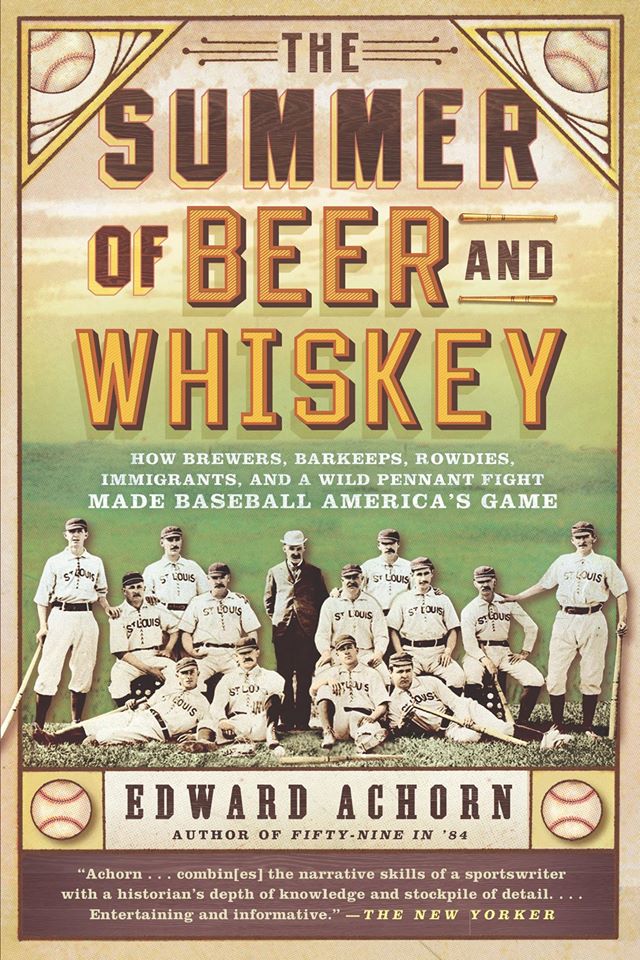
The sport of professional baseball was struggling to rebound from a gambling problem during the 1883 season, as would later happen again after the 1919 World Series, which is covered in the book Eight Men Out. Today gambling is still an issue, with gambling companies having become major sponsors of Major League Baseball and superstar Shohei Ohtani’s translator and friend Ippei Mizuhara now serving a prison sentence for illegal gambling. There are other common themes with today’s game: the way the excitement of a pennant race captivates a city’s populace; the long grind and the up-and-down nature of the season; the way that teams, players, and managers can look like heroes one day and fools the next; and the roster movements that teams go through while trying to win.
One of the other timeless aspects of baseball is second-guessing the manager. Last night, 143 seasons after the 1883 season covered in The Summer of Beer and Whiskey, I got as mad at the manager of the Arizona Diamondbacks as St. Louis Browns owner Chris Von der Ahe was, at times, at manager Ted Sullivan.
The Diamondbacks needed to win to avoid dropping 3 ½ games out of the final playoff spot with nine to play, and entered the bottom of the ninth trailing by a run. Their opponent, the Miami Marlins, was out of relief pitchers, so the Marlins turned to their starter from two days before to throw the final inning. That pitcher was not sharp, and gave up two warning track fly balls before walking the third batter of the inning. Up to the plate steps Ketel Marte, second on the team this season in home runs. Diamondbacks manager Torey Lovullo puts in a pinch runner, to have a better chance of scoring if Marte hits a double, which he did at the end of the prior night’s game. Everything seemed primed to have Marte be the hero who keeps the Diamondbacks in contention for a playoff spot. Inexplicably, Lovullo had the pinch runner try to steal second, and he was thrown out to end the game. The major difference between last night and 143 years ago was that I and other frustrated fans started texting and posting on social media to call the manager an idiot, instead of complaining to the other patrons in a bar and lambasting the manager in the newspapers.